

Smoking is a habit that also greatly affects overall health, including dental health. The toxic elements present in smoking can result in a number of dental problems, some of which may be irreversible. In a city like Chicago, whose fast-paced way of life includes regular coffee breaks and eating out, smoking may exacerbate dental problems and even result in new ones pertaining to the appearance and health of a person’s teeth and gums.
Apart from the commonly known risks of smoking to the lungs and the heart, it also results in discolored teeth, gum disease, mouth odor, and, in extreme cases, the loss of teeth. The nicotine content in the tobacco, along with tar, stains the teeth, which can only be bleached but not easily eliminated. The longer one smokes, the worse the effects can be. In this blog, you’ll learn about the adverse effects smoking has on your teeth and how to protect your oral health.
Impact of Smoking on Your Teeth
As for your teeth, the impact of smoking is quite noticeable. As you draw in smoke, your teeth are coated with nicotine and tar, leading to unwanted stains on your teeth that give them a yellowish hue instead of their original white color. The longer you smoke, the longer these stains appear on your teeth. Even professional dental cleaning cannot remove these stains, which result from smoking, without whitening your teeth.
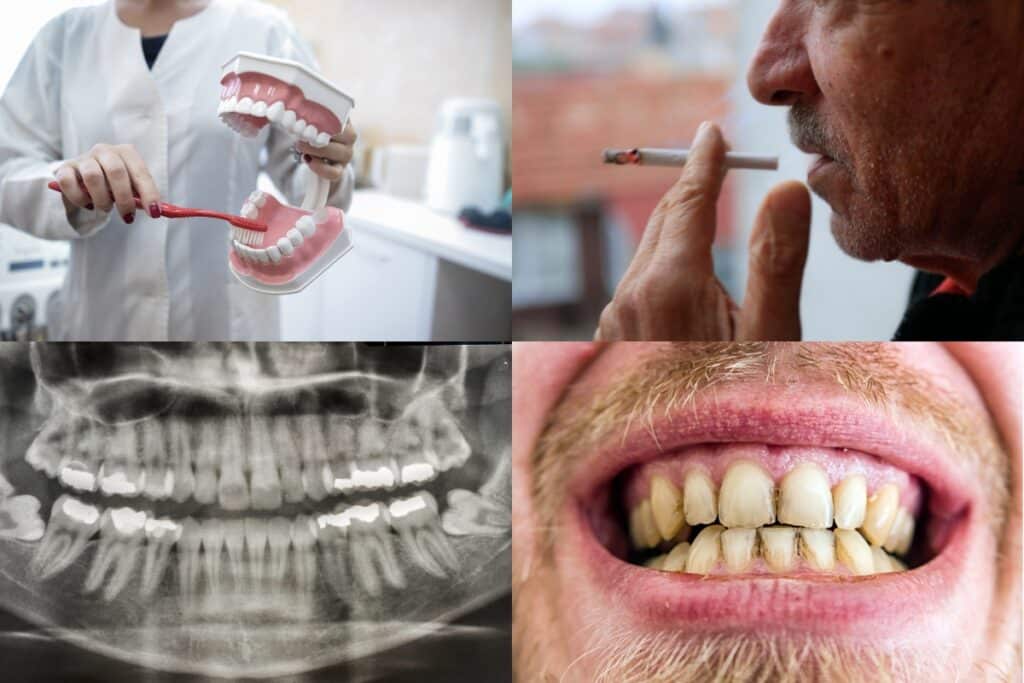
Along with staining, another possible effect of smoking is the accumulation of plaque and tartar in the teeth. Plaque is a thin film of bacteria that usually forms on teeth; if not removed through regular brushing and flossing, it accumulates and hardens, forming tartar.
It is not easy to remove tartar buildup without a dentist in Chicago, IL. People who use tobacco products have been observed to have a higher accumulation of plaque and tartar compared to people who do not use tobacco.
Smoking & Gum Disease
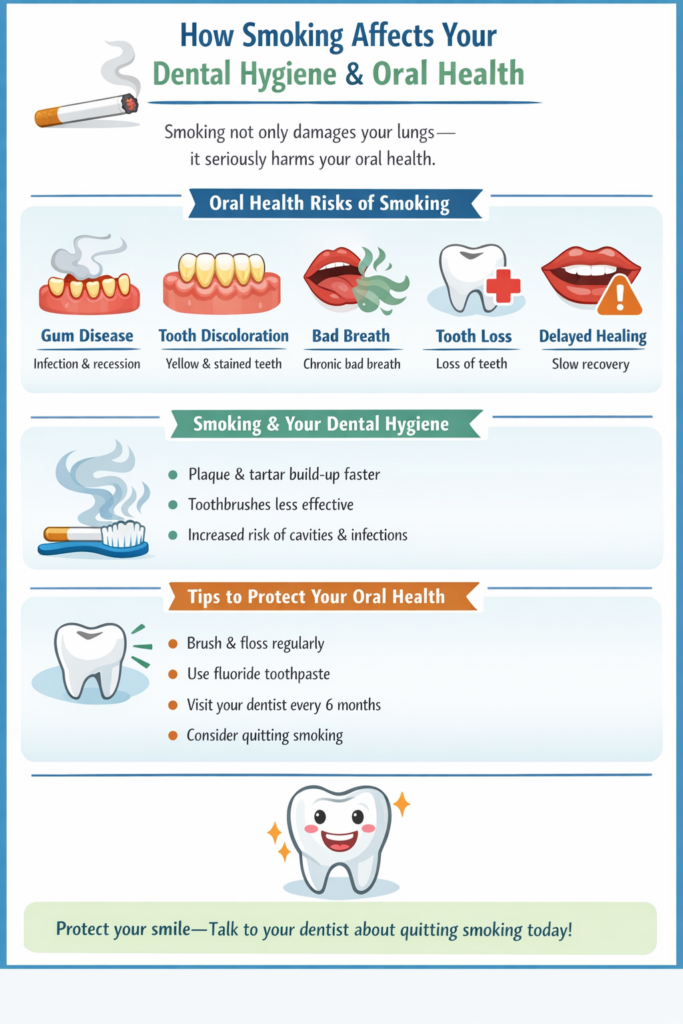
One of the most severe oral health issues that can result from smoking is gum disease. When a person smokes, they find it difficult to fight germs because their immune system has weakened. Plaque can irritate gums when it builds up on teeth.
Gingivitis is a gum disease that causes bleeding when a person flosses or brushes their teeth. Gingivitis is the first stage of severe gum disease, in which the gums become irritated due to plaque buildup on the teeth.
If left untreated, gingivitis can progress to periodontitis, a more serious condition characterized by gum recession, loose teeth, and even tooth loss. Smoking is a major risk factor for the development of periodontitis because it results in a lack of blood flow to the gums, making it even more difficult for them to heal in case of injury or infection.
Bad Breath (Halitosis)
You might have observed that when you brush your teeth, the smell of your mouth is gone, yet it comes back anyway. One of the reasons for oral malodor can be smoking because, along with all the risks associated with it, it can lead to a reduction in saliva production in the mouth because the tobacco in cigarettes can dry out the mouth, reducing saliva production in the mouth because saliva plays a very important role in flushing out food bits along with mouth bacteria, which can lead to oral malodor.
Moreover, chemicals from cigarettes impart a not-so-pleasant smell to your mouth, which may stay there even after you brush your teeth. This, in turn, may lead to regular bad breath due to smoking, which may not be easy to get rid of without stopping smoking completely.
Smoking and Tooth Loss
Loss of teeth is also another serious side effect that comes with smoking. This is because a person who smokes has a higher chance of losing teeth compared to a person who does not smoke. This is mainly due to the damage that comes with smoking and affects the gums and bones that hold your teeth in place. The decreased blood flow that comes with smoking makes it difficult for your gums to heal if they are infected or injured. This makes smokers more prone to advanced gum disease that might cause the teeth to fall out.

Although you may not necessarily lose your teeth right away, smoking can cause the erosion of the bone structure found in your jawbone. The erosion of your jawbone can affect the stability of your teeth, leading to loose teeth and bite problems. Moreover, if you already have existing problems with your teeth, including cavities, smoking can cause those problems to worsen, including extractions or implant procedures.
Tips for Protecting Your Smile
If you find yourself wanting to protect your oral health amid a continued smoking habit, the following tips can be beneficial for you:
- Brush and Floss Regularly: Since smoking hampers your body’s efforts to resist bacterial growth, it becomes all the more important to brush your teeth regularly. Regularly brush your teeth at least twice a day using fluoride toothpaste. Remember to floss your teeth daily.
- Use Mouthwash: Mouthwash can help freshen breath and control bacteria in your mouth. Choose an antibacterial mouthwash that can control plaque and prevent gum disease.
- Remain Hydrated: Dry mouth can be a consequence of smoking. Thus, drinking plenty of water is important. You can also chew sugar-free gum to stimulate the production of saliva.
- Visit Your Dentist: Since smoking can lead to dental problems, you need to see your dentist regularly to ensure your dental health is in check and to get tips on how to stay healthy despite smoking.
Take Charge of Your Oral Health Today
Quitting smoking is the best way to protect your oral health and prevent long-term damage to your teeth and gums. However, even if you continue to smoke, taking proactive steps to care for your smile can help minimize the negative effects. A dentist in Chicago, IL, can provide the support and treatment you need to keep your teeth and gums healthy.
If you are concerned about how smoking is affecting your oral health, don’t wait to seek help. Schedule an appointment at Lux Smiles today, and let us help you maintain a bright, healthy smile, no matter your lifestyle.
Questions People Ask About Smoking and Oral Health
1. How does smoking contribute to tooth discoloration?
Smoking causes nicotine and tar to build up on your teeth, leading to yellow or brown stains. These stains are hard to remove with regular brushing and may require professional whitening treatments to restore your smile’s natural color.
2. Can smoking cause gum disease?
Yes, smoking weakens your immune system, making it harder to fight off infections like gum disease. It also reduces blood flow to your gums, hindering healing and making smokers more susceptible to gingivitis and periodontitis.
3. Why does smoking lead to bad breath?
Smoking reduces saliva production, leading to dry mouth, which promotes bacterial growth and bad breath. Additionally, the chemicals in cigarettes contribute to a foul odor that lingers in the mouth, even after brushing or using mouthwash.
4. How does smoking affect oral health over time?
Over time, smoking can cause tooth decay, gum disease, bad breath, and tooth loss. The toxins in cigarettes harm your gums, weaken teeth, and decrease your ability to heal from infections, leading to long-term oral health issues.
5. Can quitting smoking improve my dental health?
Yes, quitting smoking can significantly improve your dental health. It reduces the risk of gum disease, tooth loss, and tooth discoloration, and helps restore saliva production, which is essential for keeping your mouth healthy and clean.