
If you’re an Invisalign patient in Lincoln Park, you’ve probably wondered what actually happens when you switch your Invisalign aligners. It feels simple on the surface — swap one tray for the next. But underneath that routine swap, something fascinating is happening inside your mouth. Understanding the science helps you stay motivated and get the best results possible.
At Lux Smiles Cosmetic Dentistry and Prosthodontics, Dr. Joshua Prompton guides patients through every stage of their Invisalign journey. Let’s break down exactly what’s happening each time you move to a new tray.
How Invisalign Aligners Actually Move Your Teeth
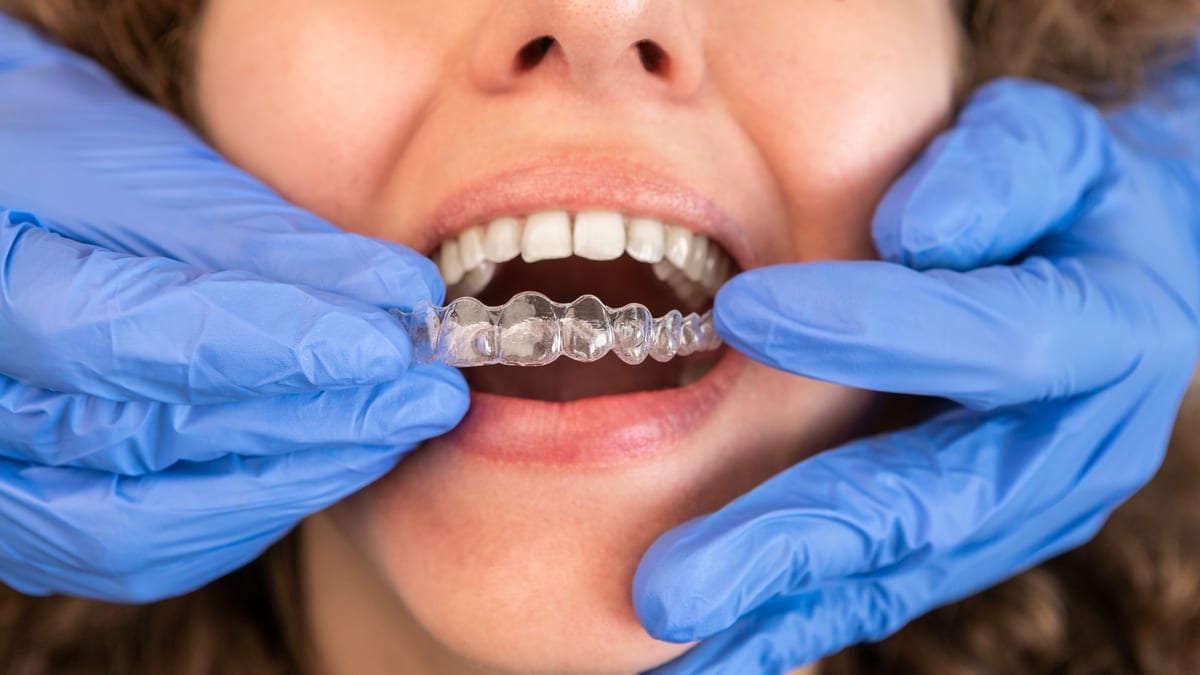
Each Invisalign aligner is custom-made to be slightly different from your current tooth position. That slight difference creates gentle, controlled pressure on specific teeth. Your body responds to that pressure by remodeling the bone around the tooth root. This is the same biological process that happens with traditional braces.
When you put in a fresh aligner, it won’t fit perfectly right away. That snug, slightly tight feeling is intentional. It means the tray is doing its job. Over the course of about one to two weeks, your teeth gradually shift to match the shape of the new aligner.
Here’s what’s happening at a cellular level:
- Pressure from the aligner activates cells called osteoclasts, which break down bone on one side of the root.
- On the opposite side, osteoblasts build new bone to fill the space left behind.
- This cycle allows the tooth to move safely through the jaw.
- Each aligner advances this process by a fraction of a millimeter.
That’s why rushing through aligners faster than prescribed can actually cause problems. The bone needs time to remodel properly before the next movement begins.
What to Expect During Your Invisalign Aligner Change Schedule in Lincoln Park
Most patients in Lincoln Park switch their aligners every one to two weeks. Dr. Prompton will determine your specific schedule based on your treatment plan. Some patients with more complex cases move more slowly. Others with minor corrections may advance more quickly.
The first day or two after switching aligners is usually the most uncomfortable. Your teeth feel pressure and mild soreness. This is a healthy sign — it means the new tray is actively engaging your teeth. The discomfort typically fades within 48 to 72 hours.
Here are a few tips to make aligner changes easier:
- Switch to your new aligner at bedtime so you sleep through the initial pressure.
- Use chewies — small foam cylinders — to seat the aligner fully against your teeth.
- Stick to softer foods for the first day after switching trays.
- Take over-the-counter pain relief if soreness is distracting, but check with Dr. Prompton first.
Wearing your aligners for at least 20 to 22 hours per day is non-negotiable. Skipping wear time throws off the entire movement schedule.
The Role of Attachments in Your Invisalign Treatment
Many patients are surprised to discover that aligners alone can’t do every job. That’s where attachments come in. Attachments are small, tooth-colored bumps bonded directly onto your teeth. They act like handles that give the aligner more grip and leverage.
Without attachments, certain movements — like rotating a tooth or pulling one down — would be nearly impossible for a smooth plastic tray. The attachment changes the geometry of the force applied by the aligner. Each attachment is placed precisely where the treatment plan requires extra control.
You may also notice small ridges or cutouts in your aligner trays. These correspond to your attachment locations. Together, they create a system that can handle surprisingly complex tooth movements. Your Dental Crowns or existing restorations may also influence how attachments are positioned during treatment planning.
Attachments are bonded at the start of treatment and removed at the end. They polish off cleanly and leave no permanent marks on your enamel.
Understanding Refinements and Why They Are Normal
Invisalign treatment rarely follows a perfectly straight line from start to finish. Most patients need refinements — a second or third set of aligners created after the initial series ends. This is completely normal and part of the process.
Refinements happen because teeth don’t always respond exactly as predicted. Biology is variable. Bone density, individual tooth shape, and wear patterns all affect how movement progresses. When Dr. Prompton evaluates your progress mid-treatment or at the end, he may identify areas that need additional correction.
A new scan is taken, and Invisalign generates a fresh batch of aligners to fine-tune your results. Refinements are included in most comprehensive Invisalign treatment plans. Think of them as a precision adjustment, not a setback.
Patients who wear their aligners consistently and attend all check-up appointments tend to need fewer refinements overall. Compliance is truly the biggest factor in how smooth your treatment timeline goes.
When to Call Your Dentist Between Aligner Changes
Switching aligners is usually uneventful. But there are situations where you should reach out to Dr. Prompton’s office before moving forward. Knowing when to pause can protect your results.
Contact Lux Smiles if you notice any of the following:
- A new aligner feels dramatically different from previous ones — more than expected.
- An attachment pops off before your next scheduled appointment.
- You notice unusual pain that doesn’t resolve after 72 hours.
- Your aligner develops a crack or visible damage.
Never skip a broken aligner and jump to the next set on your own. Always check with your provider first. Wearing a damaged or ill-fitting tray can delay treatment or cause unintended movement.
Conclusion: Make Every Aligner Count
Understanding what actually happens when you switch your Invisalign aligners in Lincoln Park gives you real power over your own treatment. You’re not just swapping plastic trays. You’re directing a carefully engineered biological process happening inside your jawbone. Every aligner worn faithfully brings you one step closer to a healthier, more confident smile.
Dr. Joshua Prompton and the team at Lux Smiles Cosmetic Dentistry and Prosthodontics are here to support you at every stage. Whether you’re just starting your Invisalign journey or navigating refinements, personalized guidance makes all the difference. If you’re curious about other restorative options, our Dental Implants Pricing Guide is a great resource to explore alongside your cosmetic treatment planning. Book Now to schedule your appointment with our team.
Frequently Asked Questions
How often should I switch my Invisalign aligners?
Most patients switch aligners every one to two weeks. Dr. Prompton will set your exact schedule based on your personalized treatment plan. Always follow your provider’s instructions rather than switching early or late on your own.
Is it normal for new aligners to feel tight?
Yes, tightness when you first put in a new aligner is completely expected. It signals that the tray is applying the correct pressure to move your teeth. The sensation typically fades within 48 to 72 hours as your teeth begin shifting.
What happens if I lose an aligner?
Contact Lux Smiles right away if you lose an aligner. Dr. Prompton will advise whether to go back to your previous tray or move forward to the next one while a replacement is ordered. Acting quickly prevents unintended tooth movement.
Do all Invisalign patients need attachments?
Not all patients require attachments, but many do. Your treatment plan determines whether attachments are necessary. They are most commonly used when teeth need rotation, vertical movement, or more precise control than a smooth aligner alone can achieve.
What are Invisalign refinements and do they cost extra?
Refinements are additional sets of aligners made after your initial series to fine-tune your results. They are a standard part of comprehensive Invisalign treatment. Whether refinements are included in your original plan or billed separately depends on the type of Invisalign package selected at the start of treatment.